Crater Lake
2018-09-18
Crater Lake, OR
This morning I headed off to Crater Lake. Now that I've left the land of the Squatch, the sun was shining and the skies were blue. It was a drive of about 2.5 hours south from Eugene to the park entrance, and then about 10 more miles to see the lake. I wasn't sure how bad the smoke would be, but once I decided to visit the Redwoods this park was only slightly out of the way and it was worth a shot. It turned out to be pretty good; the fire in the park was out as were several of the others in the area. I headed clockwise around the lake from the north, stopping at probably too many overlooks on the way. I kept hoping for that perfect view. They were all excellent.
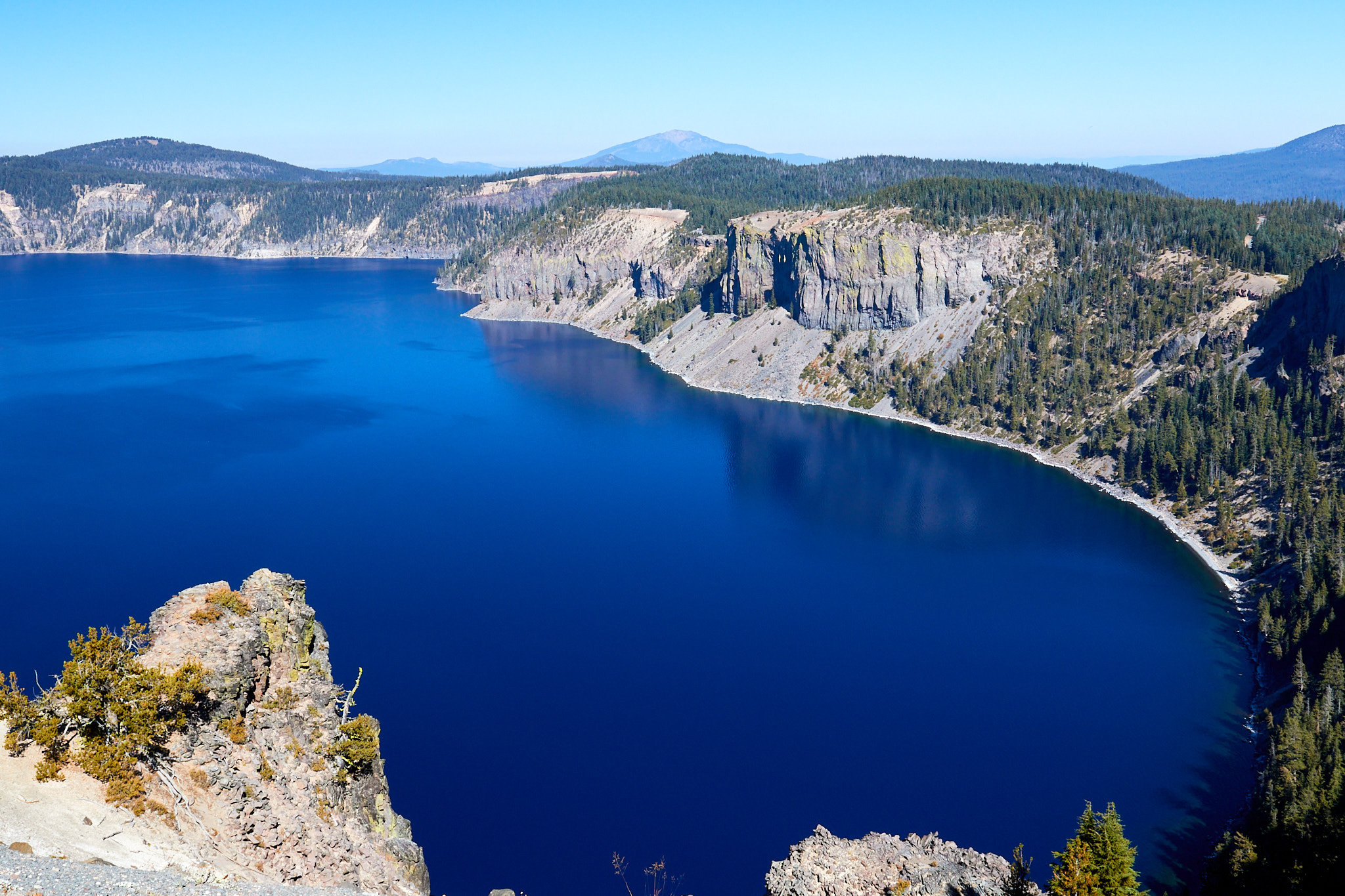
Crater Lake is the deepest lake in the US, at 1949 feet deep. The deep water looks blue for the same reason as the sky does, which was explained in the Yellowstone pools although the depth makes this blue a lot deeper. They originally measured it with a device that lowered a piece of pipe attached to piano wire. They were only a few feet off from the values found by sonar much later.
My hike for the day was Mt. Scott, the highest point in the park. It was a climb of 1200 feet over 2.5 miles (5 miles total) to get a great view down on the lake. It was exactly what I needed to stretch my legs, and of course take more pictures.
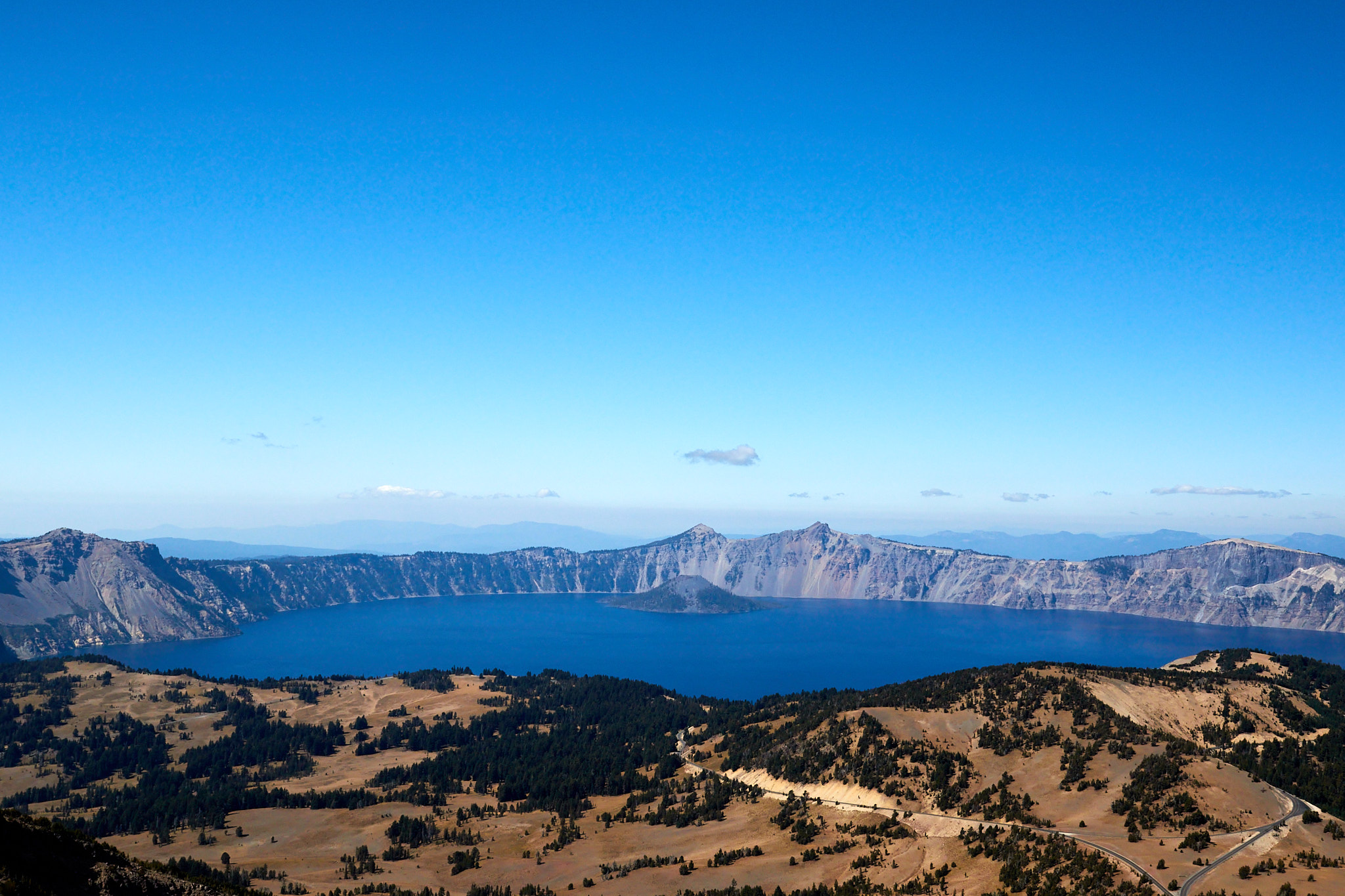
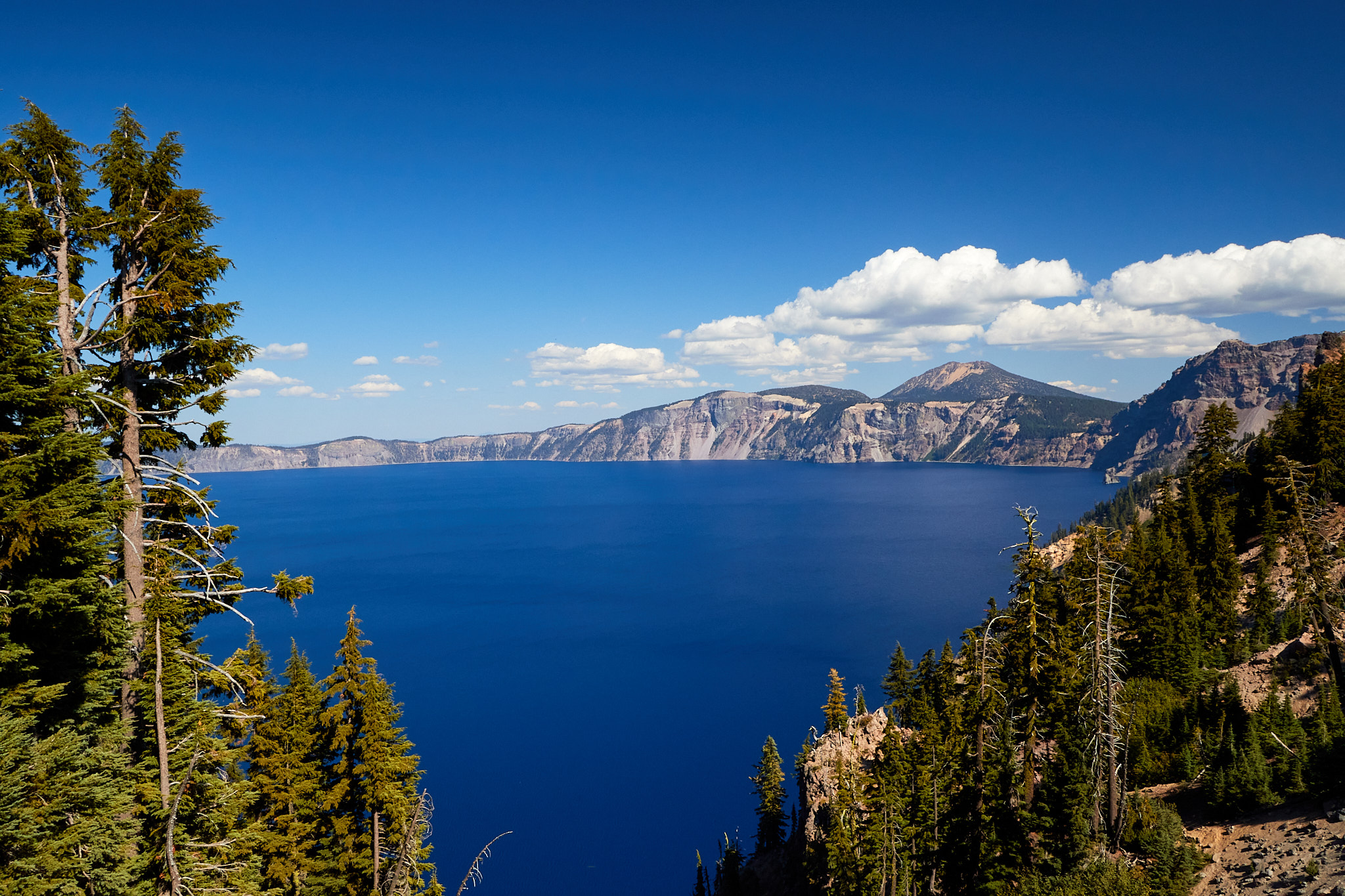
Afterwards I stopped by Rim Village. By now some puffy clouds were rolling in so I took even more pictures. I have an awful lot of pictures of one lake.
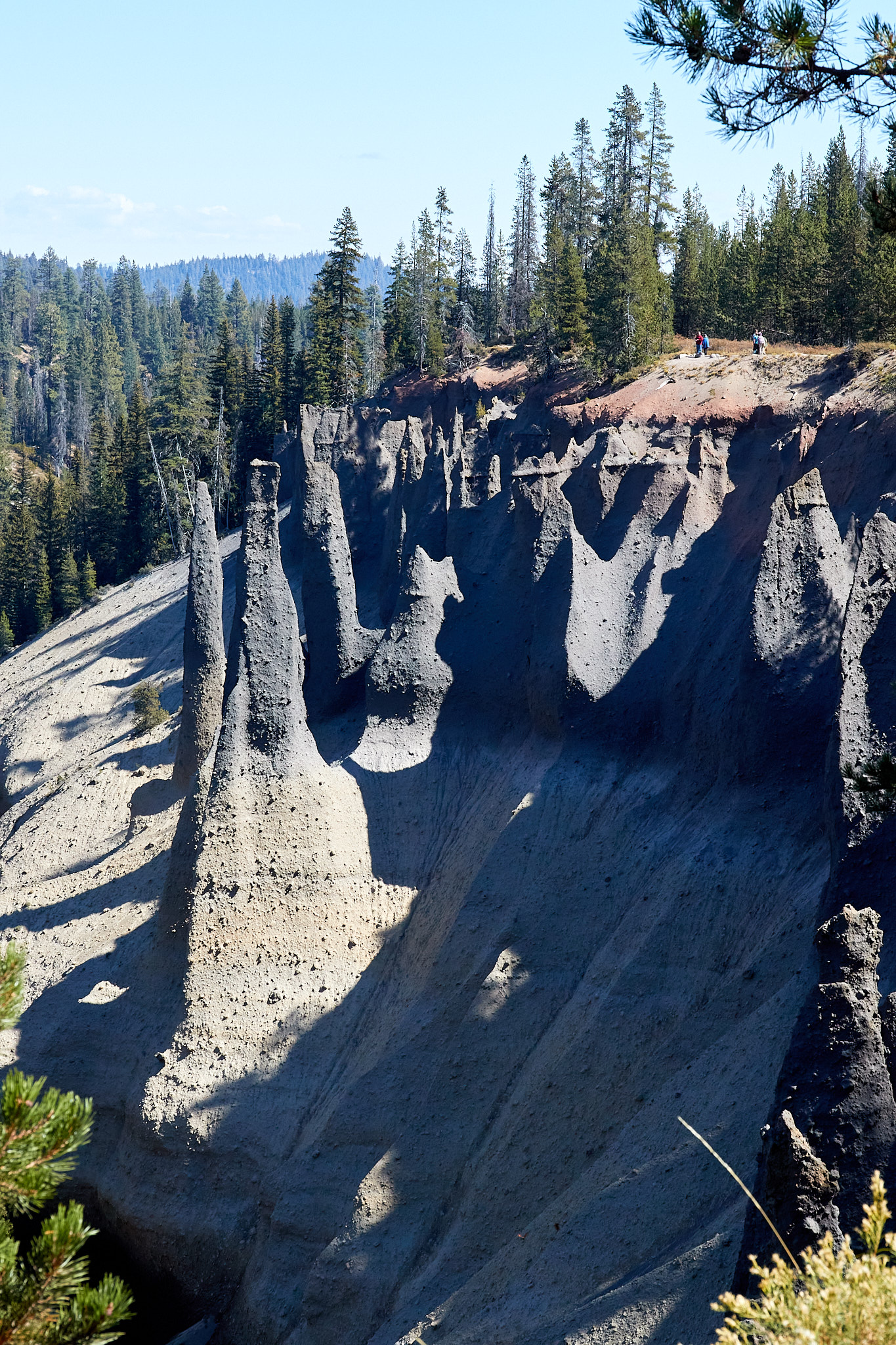
Crater Lake also has a section call the Pinnacles. These were formed by lava filling a river valley. Steam vents formed to let the water out, and these vents were imbued with minerals that made them hard. All the softer lava rock eroded away leaving these cool spires.
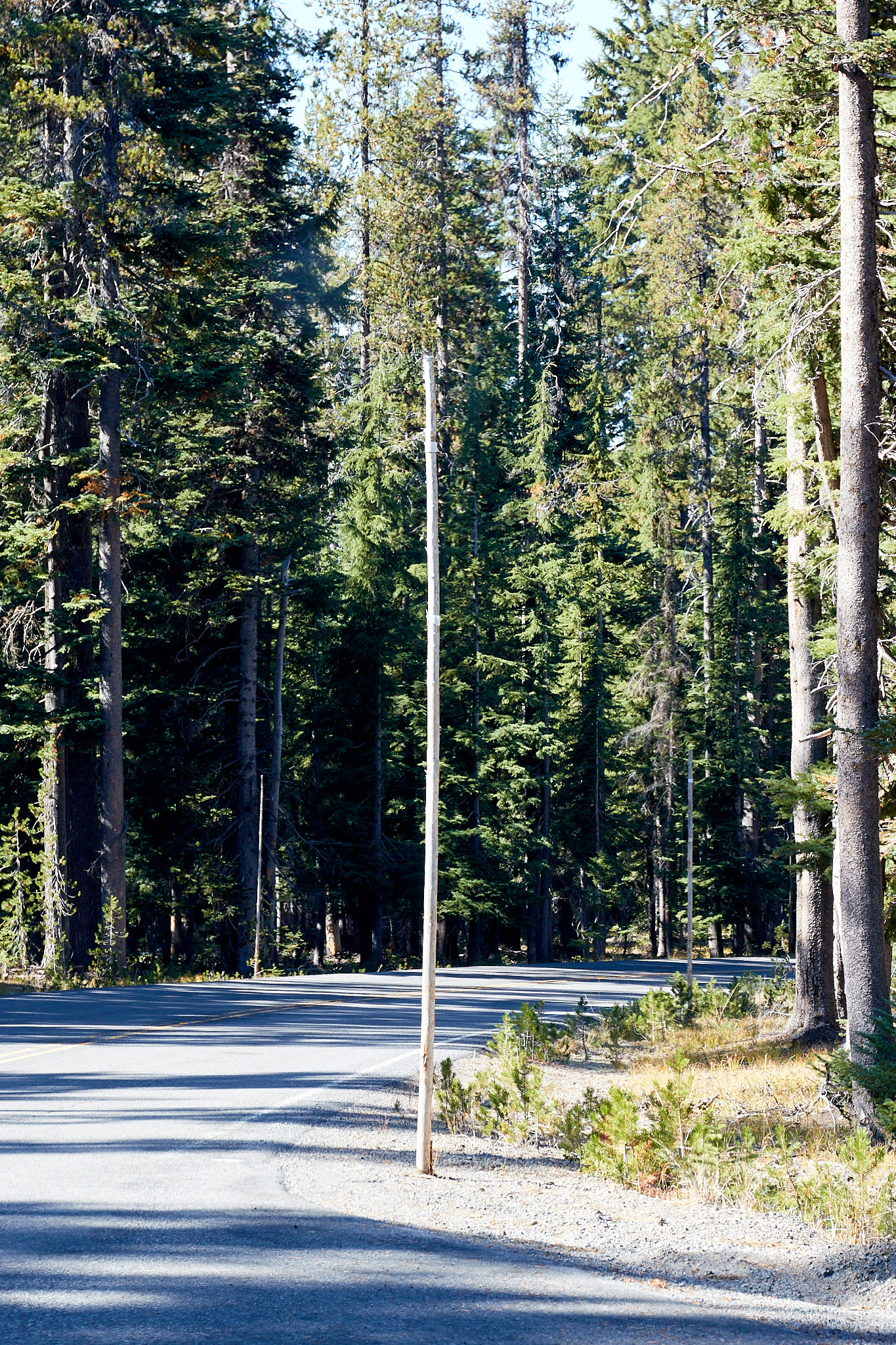
For your educational section today, I'm going to talk about getting a National Park ready for winter, or at least one specific step. From the Tetons to Glacier and around in September they put up poles I presume for the snow plow drivers. They are typically 10-12 feet tall which may give some insight into snow expectations. In Glacier and Crater Lake they used straight saplings (likely pine) which does feel more natural but it also narrows the roadway some because they are placed in pipes on the white line or just outside it. In the Tetons and Yellowstone they are large colored stakes that get driven in. I've seen a number of crews installing them over the past couple weeks.
After taking a pile of pictures, I continued on to my campground. I found this particular stop via google a couple days earlier, and called to see if they had space available. The proprietor said that he did. When I stopped, I found that the campground essentially isn't operating. They have a six permanent trailer residents, but I would be the only short term or overnight guest because Bill doesn't usually rent to anyone. I stayed on because it seemed to suit the soul of this trip. They made me feel welcome, and I had all six tent spots to myself. As a bonus I got a handful of cherry tomatoes; any vegetables are a win at this point.
On the flip side, they had a bear come through a couple mornings back. That made it an opportunity to test out my in-car sleeping arrangements. I went to a lot of effort to build it and so far it hasn't been used but it's a lot harder for a bear to swipe through steel and glass. Also, bears are my biggest fear on this journey. They're one of those things you cannot control, and the primary mitigation (travel in groups) is not something I can do. I even carried my bear spray to the lavatory tonight. I started reading A Walk in the Woods but put it down as it kept telling scary bear stories. On the road it's better to keep your head in the sand, at least a little bit.
I've been carrying bear spray on hike after hike although it turns out there are two reasons for this. The first was in case a grizzly decided I looked tasty, and the other reason is because bear spray can explode in your car. I'm not sure how, but I am positive that the bears are behind it. They are the number one threat.
Although honestly, most bear encounters end with the bears going their way and the people going theirs. I've met black bears on the trail before and everyone happily pretended the other didn't exist. Grizzlies may be another story.
Hiking Distance: 5 miles